
STEEL BUILDINGS

STEEL BUILDINGS

Introduction to Steel Buildings

Steel buildings are celebrated for their durability, flexibility, and cost-effectiveness, making them ideal for various applications across industrial, commercial, and residential sectors. Their structural integrity and design versatility present significant advantages over traditional construction materials.

Key Advantages

With a projected CAGR of over 5% from 2021 to 2028, the global steel building market is witnessing remarkable growth, reflecting an increasing preference for steel
structures in modern construction.

Key Components of Steel Buildings

Structural Support:
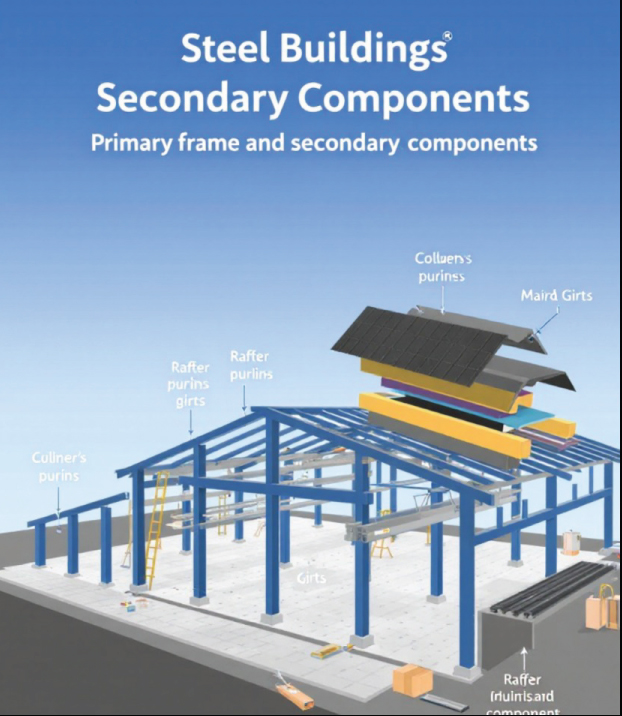
Primary frame includes columns and rafters for stability.
Roof and Walls:
Secondary components support the roof and wall structures.

Understanding Purlins

Purlins are essential horizontal beams that support the roof
load and are typically crafted from cold-formed steel. Their
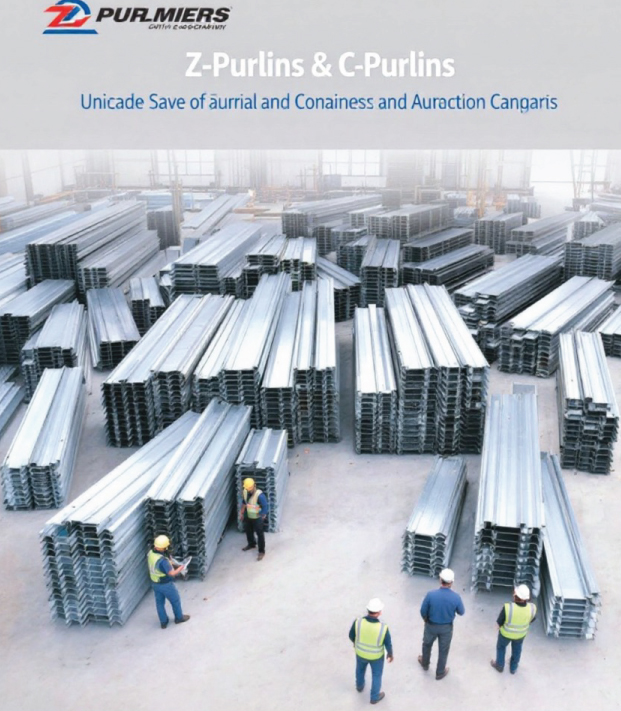
design is crucial for maintaining structural integrity, with Zpurlins and C-purlins being the most common types, each
offering distinct advantages.

Key Structural Elements

Selecting the right type of purlin can significantly impact the
durability and performance of a structure. Understanding
their characteristics helps in making informed decisions for
various construction applications.

Accessories in Steel Buildings

Skylights and Insulation

Enhance natural lighting and energy efficiency.
Ventilation Systems

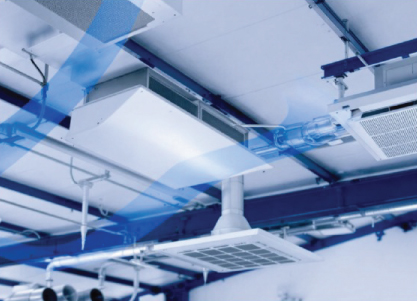
Essential for maintaining air quality and temperature control.
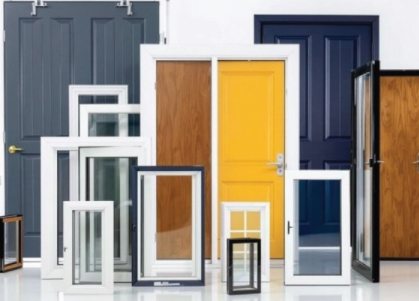
Doors and Windows

Available in various styles and materials to meet specific needs.
Advantages of Purlins

30%

Reduces framing costs by nearly one-third.

50Kg

Weight of purlins significantly lowers overall structure load.

20% faster

Installation speed increased compared to traditional framing.

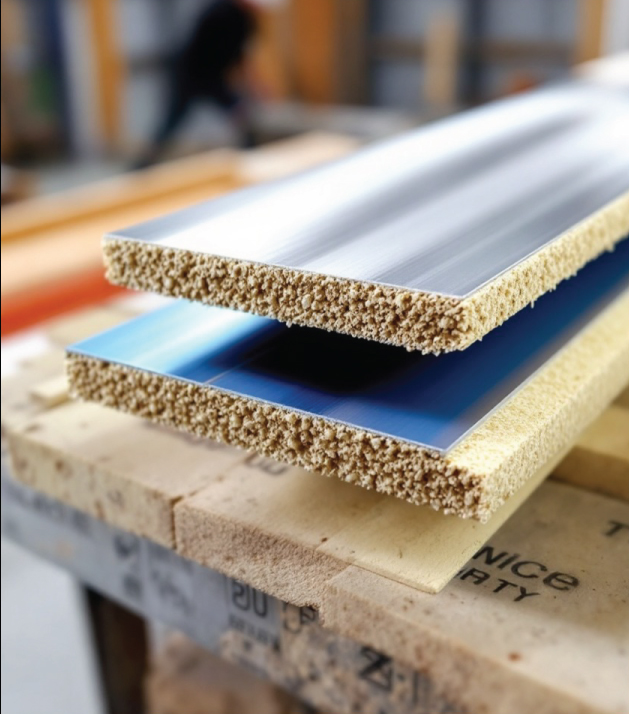
Sandwich Panels: A Modern Insulation Solution

Sandwich panels consist of two metal sheets surrounding an
insulating core providing excellent thermal efficiency and sound insulation. Their design allows for quick installation, making them an ideal choice for contemporary steel buildings, enhancing both performance and durability.

Efficient Design

These panels are particularly beneficial for roofs and walls,
ensuring energy efficiency while reducing construction time.
Their robust structure contributes to long-term sustainability
in building projects.

Benefits of Sandwich Panels

30%

Reduction in energy costs using sandwich panels.

50%

Increase in fire safety and resistance ratings.

20 years

Longevity of sandwich panels in various conditions.

Fireproofing in Steel Buildings

Effective fireproofing is essential for steel structures to
ensure their integrity during high-temperature situations.
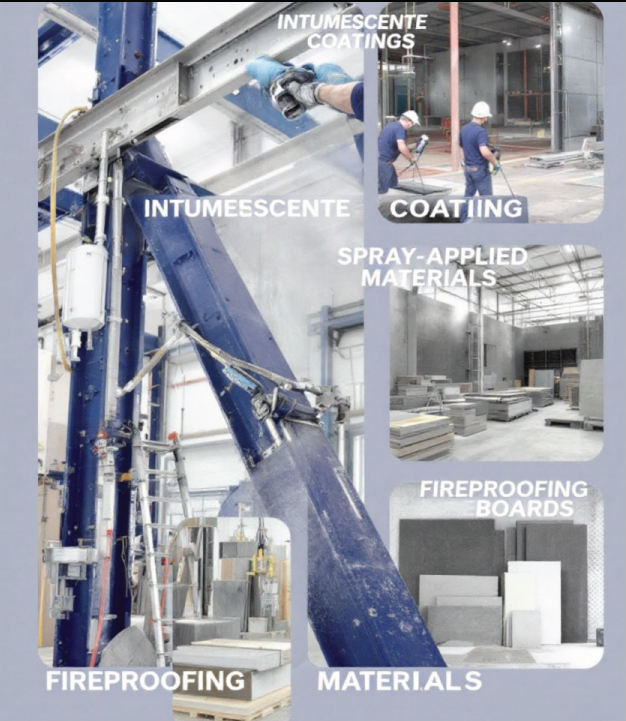
Techniques such as intumescent coatings, spray-applied fire
-resistive materials, and fireproofing boards play a crucial
role in enhancing safety.

Key Techniques

Implementing these fireproofing methods not only protects
the building’s longevity but also safeguards occupants,
making it a vital aspect of modern construction.

Advanced Fireproofing Technologies

Innovative Protection Methods

This slide explores the latest advancements in fireproofing technologies, focusing on how nanotechnology and innovative coatings enhance fire resistance and extend protection durations.

Benefits of Fireproofing

30%

Improves fire resistance rating significantly.

50%

Cuts liability insurance costs effectively.

100%

Ensures compliance with all safety regulations.

Installation and Maintenance Plan

Phase 1:
Conduct site assessment and planning
Phase 2:
Implement proper installation techniques
Phase 3:
Perform periodic maintenance checks
Phase 4:
Ensure building performance and longevity

Case Studies and Examples

This case study highlights successful steel building projects across various industries, emphasizing their versatility, benefits, and the innovations that enhance design and construction techniques.

Material Durability

The Problem:
The construction industry faced challenges related to inefficiency and sustainability in traditional building methods.
The Solution:
Innovative steel building designs and advanced construction techniques were implemented to improve efficiency and sustainability.
Results:
The projects showcased resulted in reduced construction times, lower costs, and enhanced environmental sustainability.

Q1 2024

Introduction of new eco-friendly materials for steel construction to meet growing demand.

Q3 2024

Launch of smart building systems enhancing efficiency and sustainability in steel buildings.

Q1 2025

Implementation of advanced insulation materials to improve energy efficiency in construction.

Q4 2025

Adoption of innovative design techniques integrating steel with sustainable practices.

Go to top